DSKY · Volume 16
DSKY — Volume 16 — Legacy: How Apollo Helped Build the Modern World
The long shadow a seventy-pound computer cast over everything that came after
16.1 About This Volume
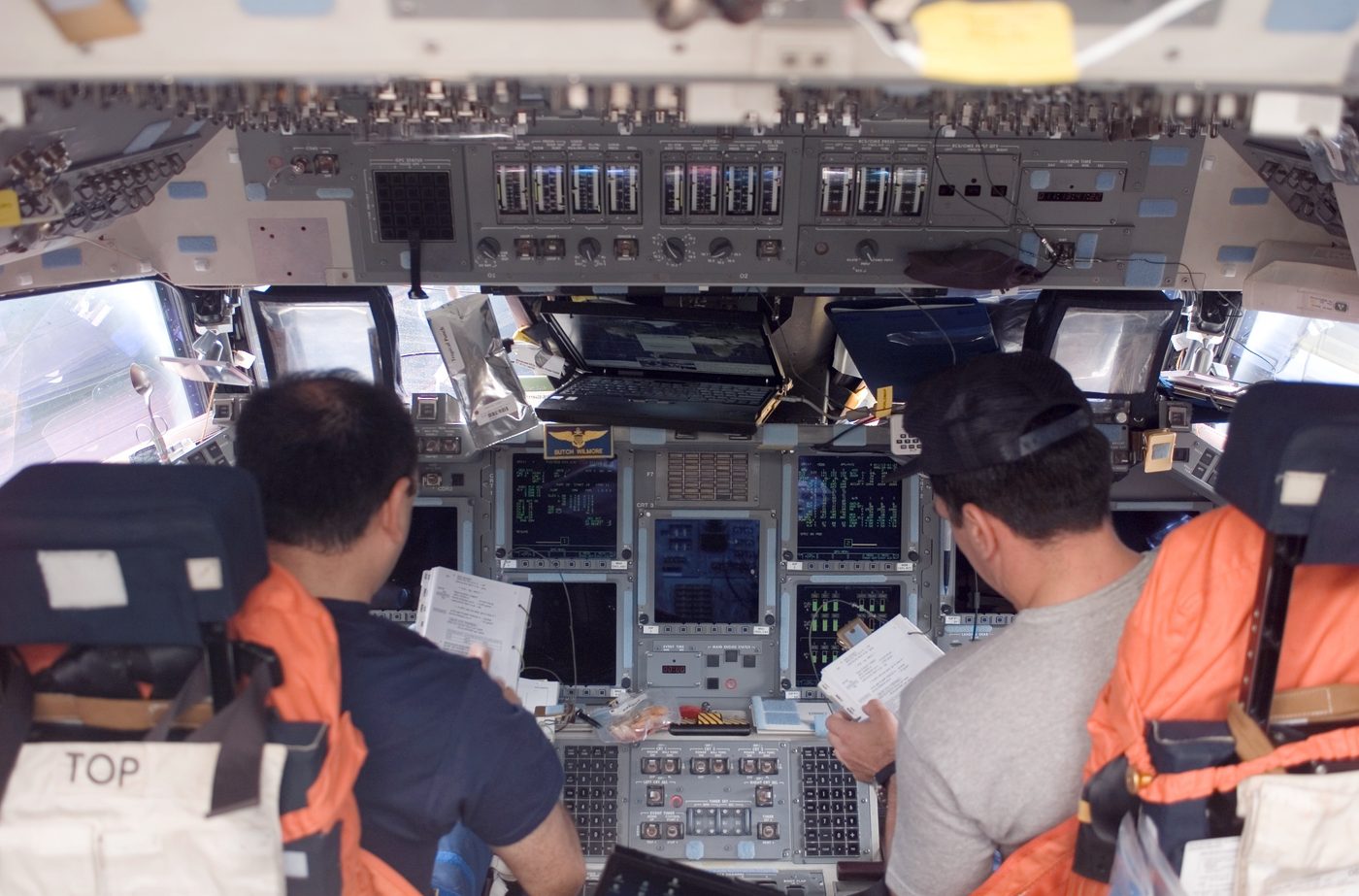
It is easy to file the Apollo Guidance Computer under “history” — a heroic relic, sealed behind museum glass, admirable but finished. That filing is a mistake. The AGC did not end when the last Lunar Module ascent stage lifted off the Moon in December 1972. Its ideas leaked outward into the world and never stopped. They are in the chip that runs the phone in your pocket, in the flight-control law that keeps an Airbus stable over the Atlantic tonight, in the little processor that decides whether your car’s airbag fires, and in the very idea — now so ordinary we forget it was ever radical — that a human being can climb into a machine, trust their life to software, and walk away.
This volume is about that long shadow. It is a deliberately careful chapter, because legacy is the place where good stories go to get exaggerated. The AGC did not single-handedly invent Silicon Valley, did not write the first line of every modern operating system, and was not the only ancestor of the embedded computer. But in five distinct domains it was a genuine, traceable, pivotal early force — and in one of them, digital fly-by-wire, the lineage is so direct that you can point at the actual hardware. We will take each in turn, weigh it honestly, and finish with the hardest and most interesting question of all: what, exactly, was the achievement, given that a modern calculator can out-compute the thing a thousand times over?
16.2 The Integrated Circuit Industry: Catalyst, Not Creator
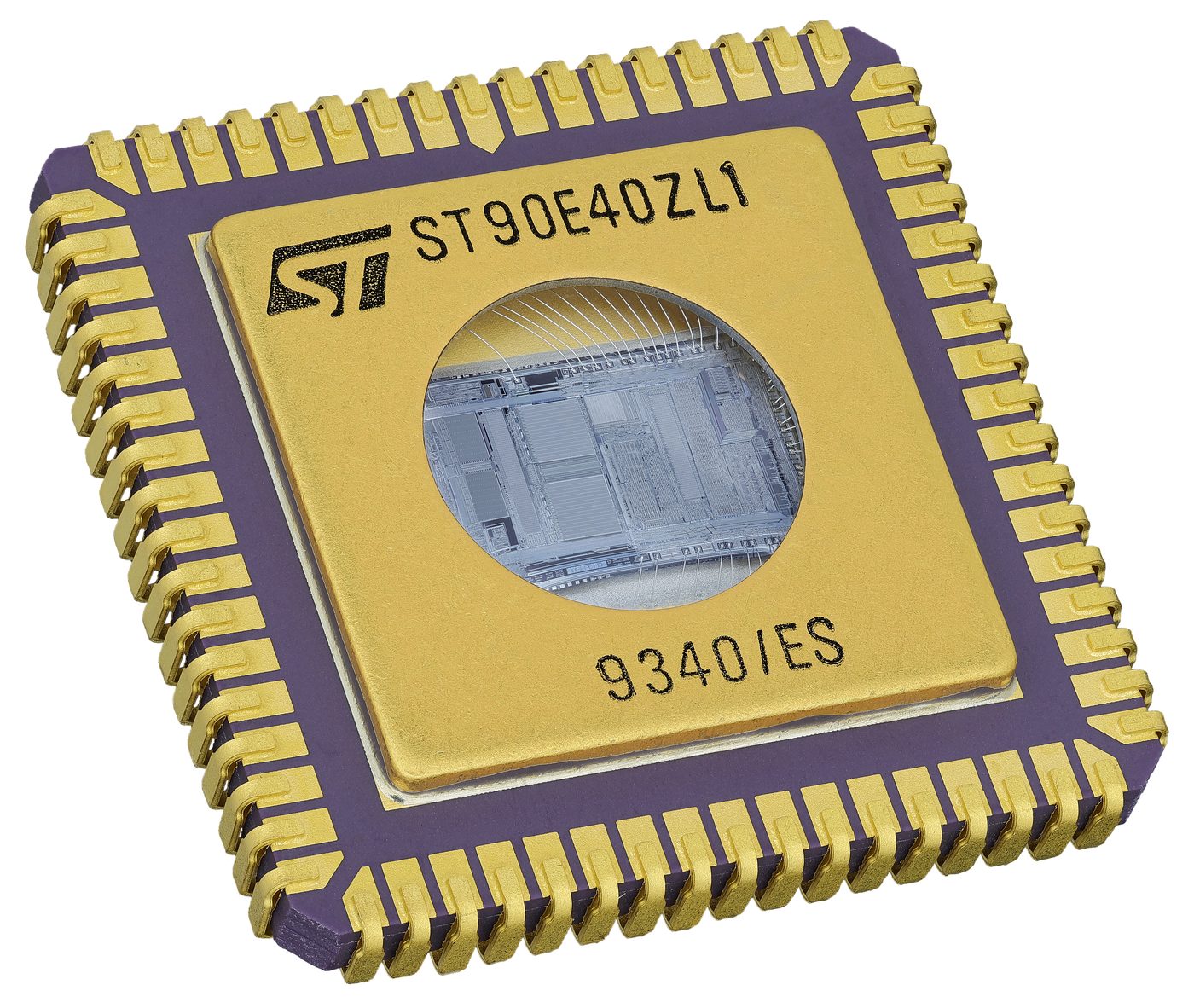
When MIT’s Instrumentation Laboratory committed, around 1962, to build the Apollo computer out of newly invented integrated circuits, the decision was close to reckless. The IC was barely three years old. Jack Kilby’s first crude device at Texas Instruments dated to 1958; Robert Noyce’s planar silicon version at Fairchild Semiconductor to 1959. Nobody had flown one, few had built anything serious with them, and their reliability over thousands of hours was an article of faith rather than fact. Yet the Lab chose to fill the AGC with thousands of identical Fairchild “Micrologic” resistor-transistor-logic gates, because integrated circuits were the only way to fit a real computer inside the brutal weight and volume budget of a spacecraft.
That bet had enormous downstream consequences, and they are worth stating precisely because they are so often overstated. Apollo became, for a few crucial years, the largest single customer the infant chip industry had. Through 1965 the Apollo program was the biggest consumer of integrated circuits in the world; over the life of the project the guidance computers and their ground equipment consumed on the order of a million chips. In 1964 Fairchild alone shipped roughly a hundred thousand devices for Apollo. By the mid-1960s, NASA and the Apollo effort were absorbing a very large share — some accounts put it around half — of total U.S. integrated-circuit production.
What that demand did was threefold. It pulled production volume up, which is the thing that makes semiconductor economics work at all — chips get cheaper the more of them you make, and a guaranteed government buyer let manufacturers tool up for volumes they could not yet sell commercially. It pulled prices down: an IC that cost on the order of fifty dollars in 1962 had fallen toward a couple of dollars within a few years, partly on the back of that volume. And — this is the part unique to Apollo — it pulled reliability standards up. NASA would not fly a part that failed. The Lab’s obsessive screening, burn-in, and failure analysis forced suppliers to understand why chips died and to drive defect rates down to levels the commercial market had never demanded. The discipline that made chips trustworthy enough for the Moon made them trustworthy enough for everything else.
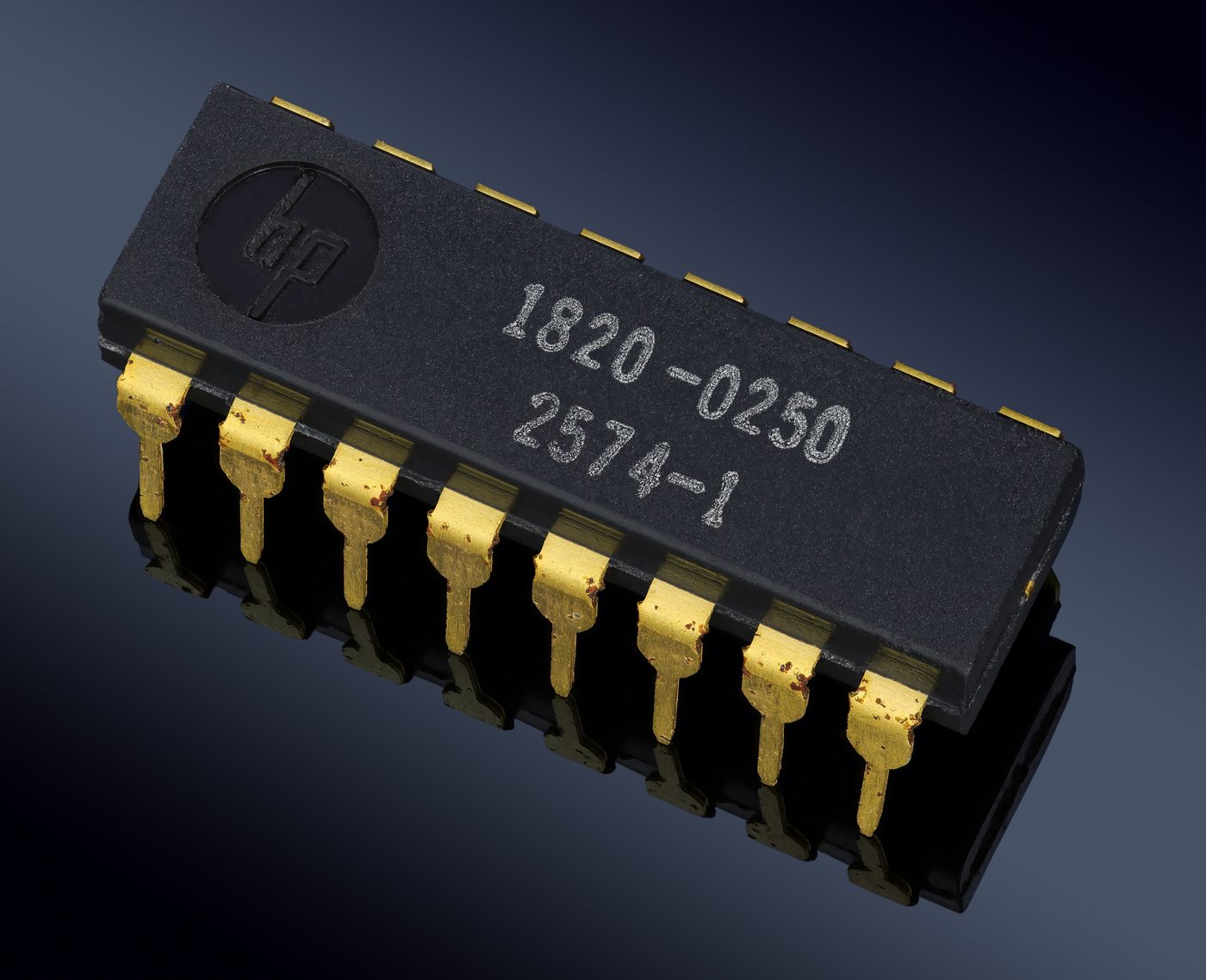
Here is the honest framing. Apollo did not create Silicon Valley — the transistor, the planar process, the venture capital, the Cold War missile money (the Minuteman II guidance computer was a comparably important early IC customer), and the talent migrations from Shockley to Fairchild to Intel would all have happened without a Moon program. But Apollo was a pivotal early catalyst and an extraordinary proving ground. It gave the integrated circuit its first high-prestige, high-volume, zero-defect mission at exactly the moment the technology needed to prove it could be trusted. The Moon landing was, among other things, the most expensive product demonstration the semiconductor industry ever received. The chips that came home from that demonstration went on to run the world.
16.3 Digital Fly-by-Wire: The Lineage You Can Point At
If the chip story requires careful hedging, the fly-by-wire story does not. This is the AGC’s most concrete legacy, and the chain of custody is almost comically literal: NASA took actual Apollo hardware out of the spacecraft program and bolted it into an airplane.
For all of aviation history up to the 1970s, the pilot’s controls were connected to the control surfaces by mechanics — cables, pushrods, hydraulics, a continuous physical linkage from the stick to the rudder. “Fly-by-wire” replaces that linkage with electrical signals and a computer. The pilot’s stick becomes an input device; a computer reads it, decides what the control surfaces should do, and commands them. The machine sits permanently between the human and the airplane.
The first aircraft to fly this way with no mechanical backup at all — the computer or nothing — was NASA’s F-8 Digital Fly-By-Wire testbed, a modified F-8C Crusader that first flew on 25 May 1972 with research pilot Gary Krier at the controls. And the digital brain it flew on was an Apollo Guidance Computer. NASA’s Dryden Flight Research Center took a spare AGC, reprogrammed it for the aircraft-control task, paired it with an Apollo inertial measurement unit, and made it the sole authority between the pilot’s stick and the F-8’s control surfaces. The famous program photographs show the unmistakable AGC and its DSKY-family hardware crammed into the fuselage of a fighter jet. The computer that had steered Eagle to Tranquility Base was now teaching an airplane to fly without cables.
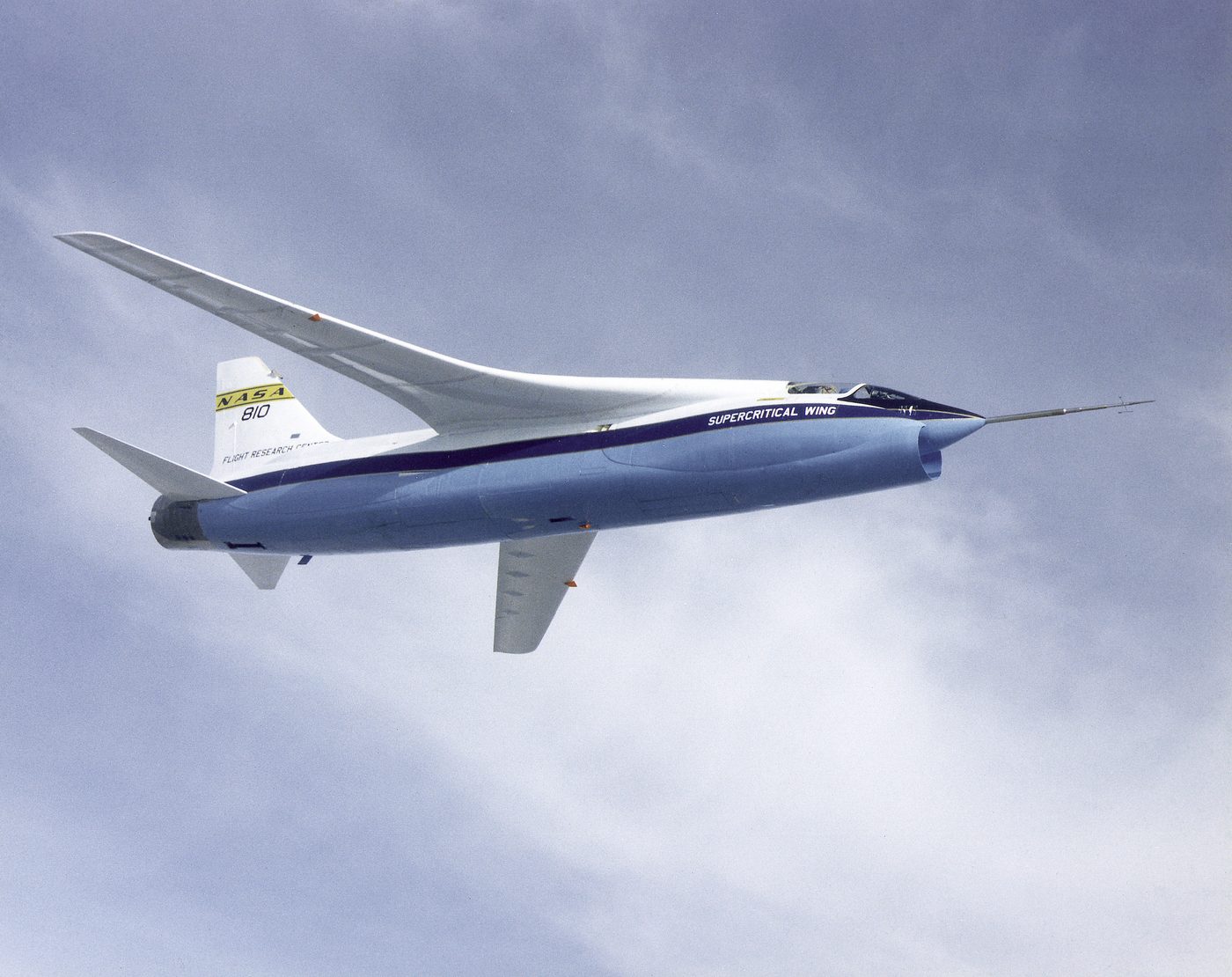
The F-8 program ran for thirteen years and proved the thing that mattered: that a digital computer could be made reliable enough to be the only path between pilot and aircraft, and that doing so unlocked capabilities a mechanical linkage never could. From there the lineage forks and spreads. Within NASA, the F-8 work fed directly into the avionics of the Space Shuttle, whose orbiter flew on an all-digital fly-by-wire system built around redundant flight computers — four running identical software in voting lockstep, plus a fifth running independently written backup software in case a common bug killed the other four. The Shuttle could not be flown without its computers; aerodynamically it was a brick with wings, stable only because software made it so.
Outside NASA, the idea became the foundation of modern aviation. Military aircraft embraced it first — the General Dynamics F-16, flying from the mid-1970s, was deliberately designed to be aerodynamically unstable and therefore far more agile, a trick that is only survivable because a fly-by-wire computer makes thousands of tiny corrections per second that no human could. Then it crossed into civil aviation: the Airbus A320, entering service in 1988, was the first mass-produced airliner with full digital fly-by-wire, its sidestick controllers and protective “flight envelope” software now the template for the entire A320, A330, A350 and A380 family. Boeing followed with the 777 in the 1990s. Today, when you fly on almost any modern jet, a computer sits between the pilot and the wing, smoothing, protecting, and translating — and the unbroken thread back to that arrangement runs through the Shuttle, through the F-8, to a reprogrammed Apollo computer, to the DSKY.
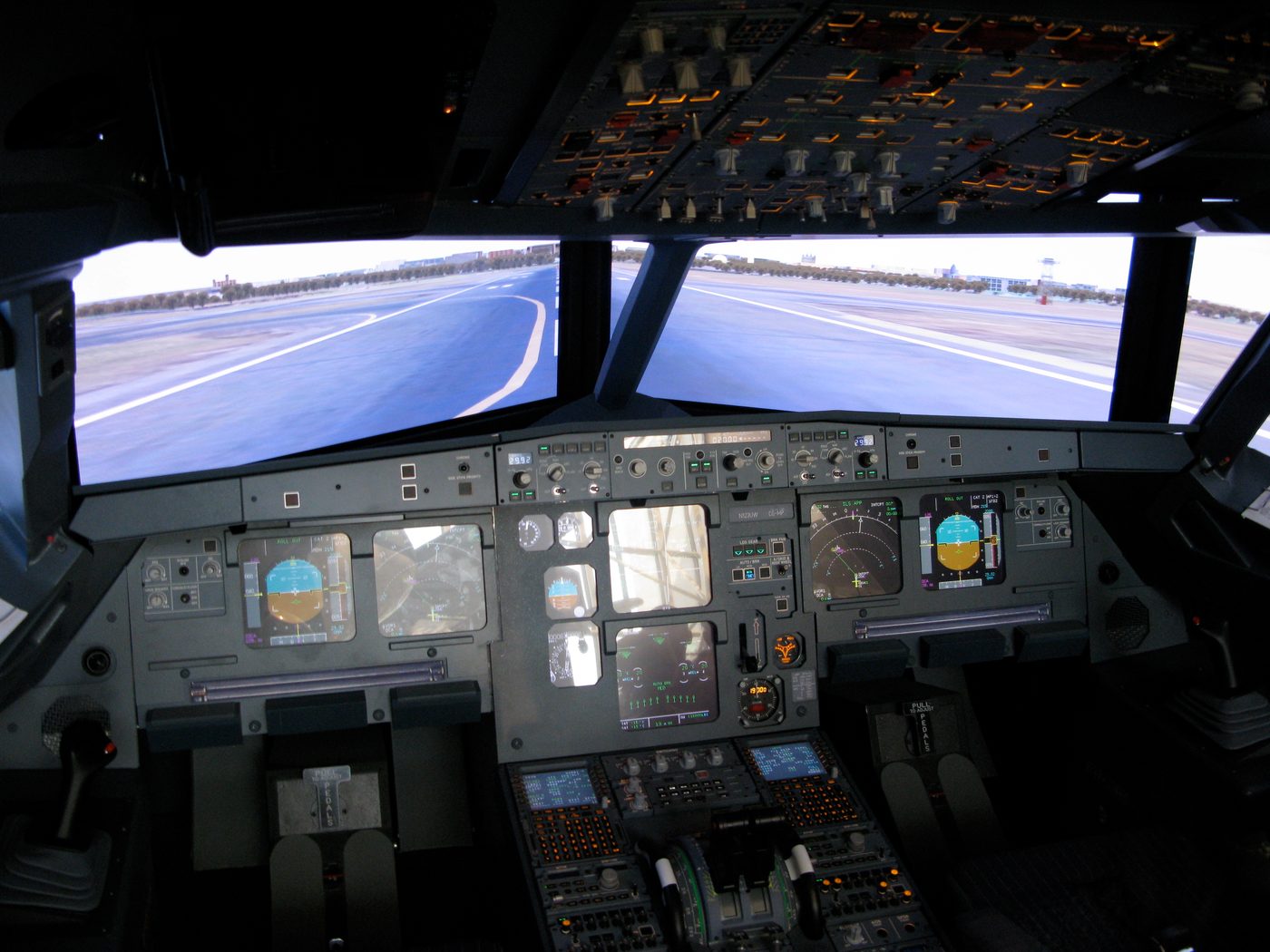
There is a beautiful continuity of philosophy here too, not just hardware. Recall from Volume 13 how the Lunar Module’s P66 program divided the landing between human and machine: the commander chose where by tilting the spacecraft, while the computer managed how fast down. That negotiated, shared authority — the human expressing intent, the computer executing it safely within limits — is exactly the relationship a modern fly-by-wire airliner has with its crew. The A320’s flight envelope protection, which will not let the pilot stall or overstress the aircraft no matter how hard they pull, is the lineal descendant of an idea first worked out in the last five hundred feet above the Sea of Tranquility.
16.4 Software Engineering as a Discipline
We told this story at length in Volume 11, so here we treat it as legacy rather than narrative. When Margaret Hamilton’s team at the Instrumentation Laboratory set out to write the onboard software for Apollo, there was no established profession to belong to. Hamilton has said, often and pointedly, that she coined the term “software engineering” precisely to claim for her work the legitimacy and rigor that “engineering” implied — and that she was, at the time, half-teased for the presumption. Software was widely regarded as an afterthought to hardware, something clever people improvised; the idea that it deserved its own engineering discipline, with methods and standards and accountability, was not obvious.
Apollo helped make it obvious. The flight software was, for its era, an enormous body of life-critical code that absolutely could not fail, written by a large team, that had to be verified to a degree no commercial software was. That forced the invention and adoption of practices the field now takes for granted: rigorous specification, systematic testing, configuration management of who changed what and when, priority on error detection and recovery rather than merely getting the happy path to work. The famous 1202 alarms of Apollo 11 (Volume 12) were not a failure of this discipline but its vindication — the software had been designed to detect that it was overloaded, shed low-priority work, and keep the mission-critical loops running, and it did exactly that, on live television, with two lives and a national ambition riding on it.
The legacy is partly vocabulary and partly worldview. Apollo helped establish, as a matter of demonstrated fact rather than assertion, that large life-critical software is its own engineering problem requiring rigor, method, and humility about human error. Every safety-critical software standard since — in avionics, in medical devices, in nuclear control — descends intellectually from the recognition that you cannot just hope a million-dollar machine’s code is correct; you have to engineer it to be, and engineer it to survive being wrong.
16.5 Real-Time Embedded Computing
Here is the legacy that touches the most ordinary corners of modern life, even if it is the hardest to trace by a single thread. The AGC was an early, influential ancestor of the real-time embedded computer: a small, special-purpose machine, wired into a larger system, that must sense and control the physical world on a deadline that cannot slip.
Think about what made the AGC unusual as a computer. It was not on a desk; it was buried inside a vehicle, with no operator in the modern sense — its job was to read sensors (the inertial unit, the radar, the optics) and drive actuators (engines, thrusters) in real time, continuously, while a human got on with flying. It had hard deadlines: a guidance calculation that arrives a second late is not a slow answer, it is a wrong answer, because the spacecraft has moved. It had a priority-driven preemptive scheduler — the Executive, which Volume 12 examined — that could juggle many tasks, always run the most urgent first, and, under overload, shed the least important work rather than freeze. And it was fault-tolerant and restart-capable: it could detect that it had gotten into trouble, throw away its current state, and restart into a clean, consistent condition in a fraction of a second without losing the mission.
Write that list out and you have described the design goals of a modern real-time operating system. The priority scheduling, the preemption, the graceful degradation under overload, the watchdog-driven restart into a known-good state — these are the defining features of the software that now runs inside an almost unimaginable number of devices. The engine-management computer and the anti-lock-braking and airbag controllers in your car; the infusion pump and the pacemaker in a hospital; the controllers in industrial robots, aircraft engines, satellites, and spacecraft — all of them are small computers with hard deadlines that must never simply hang. The AGC did not invent this category by itself, and other strands (process-control computers, military avionics) fed it too. But the AGC was among the first to get all of these properties right at once, under the unforgiving discipline of human spaceflight, and to prove on the most public stage imaginable that a small computer could be trusted to control a vehicle with lives aboard.
16.6 The “Less Powerful Than a Calculator” Trope, Examined Honestly
You have heard it a hundred times. The computer that landed men on the Moon had less memory than a greeting card. Your phone is millions of times more powerful. A pocket calculator could out-compute it. All of these statements are, taken literally, true — and taken as they are usually meant, deeply misleading. It is worth taking the trope apart carefully, because getting it right is the whole point of understanding what the AGC actually was.
Start with the raw numbers, which are genuinely humbling. The AGC weighed about seventy pounds, drew roughly fifty-five watts, ran at about a megahertz in effective processing rate, and held something like 36,864 words of fixed (read-only) rope memory and only about 2,048 words of erasable memory. By any specification you care to name — clock speed, memory, transistor count — a modern graphing calculator beats it by one to three orders of magnitude, and a smartphone beats it by millions. A USB charger’s control chip out-computes it. None of this is in dispute.
But specifications measure the wrong thing. The AGC’s achievement was never raw computation. It was real-time reliability and control under hard constraints. Consider what the AGC actually did that your phone, for all its power, was never built to do. It ran, without crashing, for the entire duration of a mission on which any crash could kill the crew. It controlled a physical vehicle — firing engines, steering thrusters, holding an attitude — on deadlines measured in milliseconds, while simultaneously talking to a human through the DSKY. It detected its own overload and degraded gracefully instead of freezing. It was built from parts screened to a reliability standard that consumer electronics has never had to meet, because a phone that crashes once a week is a minor annoyance and a guidance computer that crashes once is a funeral.
The comparison misleads because it measures a sprinter against a surgeon and concludes the surgeon is slow. Your phone has, by any computational yardstick, staggering power — and it is also a device engineered to a completely different standard, one in which occasional failure is acceptable, deadlines are soft, and no one’s life is wired to the output. It was never engineered to the AGC’s standard of fault tolerance for human life, and if you tried to fly a Lunar Module on an unmodified smartphone, the first thing you would have to do is throw away almost everything that makes it a smartphone and rebuild it into something much more like an AGC: hardened, deterministic, redundant, real-time, and obsessively verified.
So the right way to hold the trope is this. Yes, the AGC was tiny — astonishingly, almost unbelievably tiny by modern measure, and that tininess is a real and wonderful fact that tells you how far computing has come. But tininess was never the point. The point was that a seventy-pound box running on the power of a dim light bulb was engineered so well that human beings bet their lives on it, repeatedly, and won every time. Power is cheap now. Trust was the hard part, and the AGC earned it.
16.7 The Cultural Legacy
That earned trust is, in the end, the deepest legacy of all — deeper than any chip or flight-control law.
Before Apollo, the idea of placing a human life in the hands of a computer was, culturally, almost unthinkable. Computers were room-sized oddities tended by specialists; the notion that you would strap yourself into a vehicle and let software fire the engine that either landed you safely or did not was a genuine leap of faith. Apollo took that leap, in public, with the whole world watching, and it worked. Twenty-four human beings rode that computer to the Moon and home. None of them died because the computer failed them.
That is a watershed in the relationship between people and machines. Apollo proved — not argued, proved, in the most consequential demonstration available — that human lives could be entrusted to software and computers, and that with enough rigor the trust would be repaid. Every later act of that same trust descends from it: the first time you let an autopilot land an airliner in fog, the first time a surgeon let a robot hold the instrument, the first time you sat in a car and let it brake for you. We live now inside a quiet, total dependence on computers we cannot see and would not understand, and we extend that dependence so casually that we never notice we are doing it. Apollo is part of why we trust so easily. A small grey box, a numeric keypad, and a team of young engineers in Cambridge taught a civilization that it could put its life in a machine’s hands and live.
That is not a thing behind museum glass. That is the water we swim in.
Next — Volume 17: Preservation, Restoration & Pop Culture.
Comments (0)